 +44 (0)208 54 22 333 |
 hello@kpr.global |
 Login

Landlords are legally obliged to provide designated pathways that tenants and visitors can use to safely evacuate their properties in cases of an emergency, such as fire.
At all times, exit routes must be freely accessible and never locked. They must also be free of any obstruction, such as pushchairs, bicycles, boxes or furniture, and any fall hazards, such as loose carpets, tiles, mats, and unsecured wiring. Any steps leading to a fire escape should be clearly signposted and marked to prevent trip and slip hazards.
Tenants should be able to access an escape route from every room in the property and multiple well signposted escape routes from each floor must be available.
All signage on every floor must be easily identifiable with universal images that foreign speaking tenants and visitors can understand.
All escape routes should be equipped with fully functioning emergency lighting to facilitate evacuation in low-light conditions.
Floors and walls on escape routes should be made of fire-resistant materials.
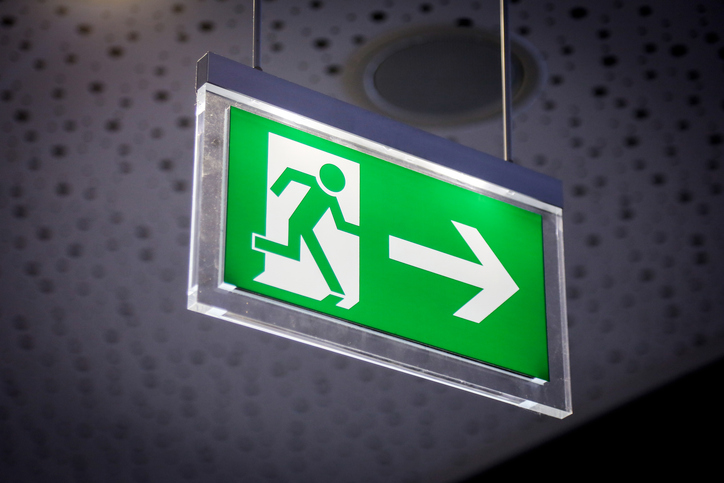
Escape routes for converted housing and blocks
For rental properties with more than one residency in the same building there needs to be a communal means of escape. Stricter regulations apply to Houses of Multiple Occupancy (HMOs) due to the increased number of occupants and potential for confusion during an evacuation. Escape routes must be inspected regularly.
Fire risk assessments:
For complex rental properties, a professional fire risk assessment is recommended to identify potential hazards and ensure adequate escape routes. Smoke alarms, CO detectors and fire extinguishers must also be routinely checked to ensure they are always in perfect working order.
Tenant awareness:
Landlords should inform tenants about the location of escape routes and how to use them in an emergency. Landlords should also ensure that any fire extinguishers have clear, universal visual instructions with images available, especially in larger properties, such as the HMOs, although specific regulations may vary depending on the location and type of property.
Fire blankets are not a legal requirement in rental properties, with the exception of HMOs, however, they are advised to help prevent and contain small fires. Landlords that provide these are showing welfare for their tenants and demonstrating that they are taking steps to mitigate any risks identified in their risk assessments, so it is good practice to provide them.
How can Proptech help save lives?
Proptech can play a vital part in fire safety checks – providing you opt for the most suitable software to manage this correctly. The many Proptech software options out there may be overwhelming, so be sure to research properly. KPR’s expert software offers reliable automated scheduling and reminders for smoke alarm maintenance with regular testing and expiry date checks. It can also schedule reminders and dates for fire door safety compliance with set checklists for consistency and ease, ensuring you are always fully covered – a small price to pay for such an invaluable outcome.
The Building Safety Act 2022 have set out further requirements regarding fire doors and how fire safety should be managed across different premises across England and Wales. With the stringent Act effective from October 2022 and April 2023, it is more vital than ever to remain compliant.
At KPR we understand the ever-changing demands of the industry and strive to address the issues agents and property owners face.
We have our own in-house development team with knowledge on modem technology and methodologies, which keep KPR software current, and always focusing on the next level.
If you would like to find out how KPR can help you and your business, feel free to speak with our helpful team today!
0208 542 2333
hello@kpr.global


